
Transitional interior design: where british and american style meet
With the recent opening of our Los Angeles showroom, we are delighted that Clive Christian Interiors now proudly boasts three showrooms across the United States. With a significant proportion of our clientele residing stateside, we thought it fitting to reflect on the unique design preferences and trends that distinguish our projects in the UK from those across the pond.
With the recent opening of our Los Angeles showroom, Clive Christian Interiors now proudly boasts three showrooms across the United States. With a significant proportion of our clientele residing stateside, it feels timely to reflect on what distinguishes British interior design from its American counterpart, and where, increasingly, the two meet.
In short: British interiors favour traditional, heritage-led detailing and muted, layered colour, while American interior design tends towards bolder colour, larger open-plan spaces and a more curated finish. Transitional interior design, blending classical form with contemporary materials, has emerged as the style bridging both British and American interior design.
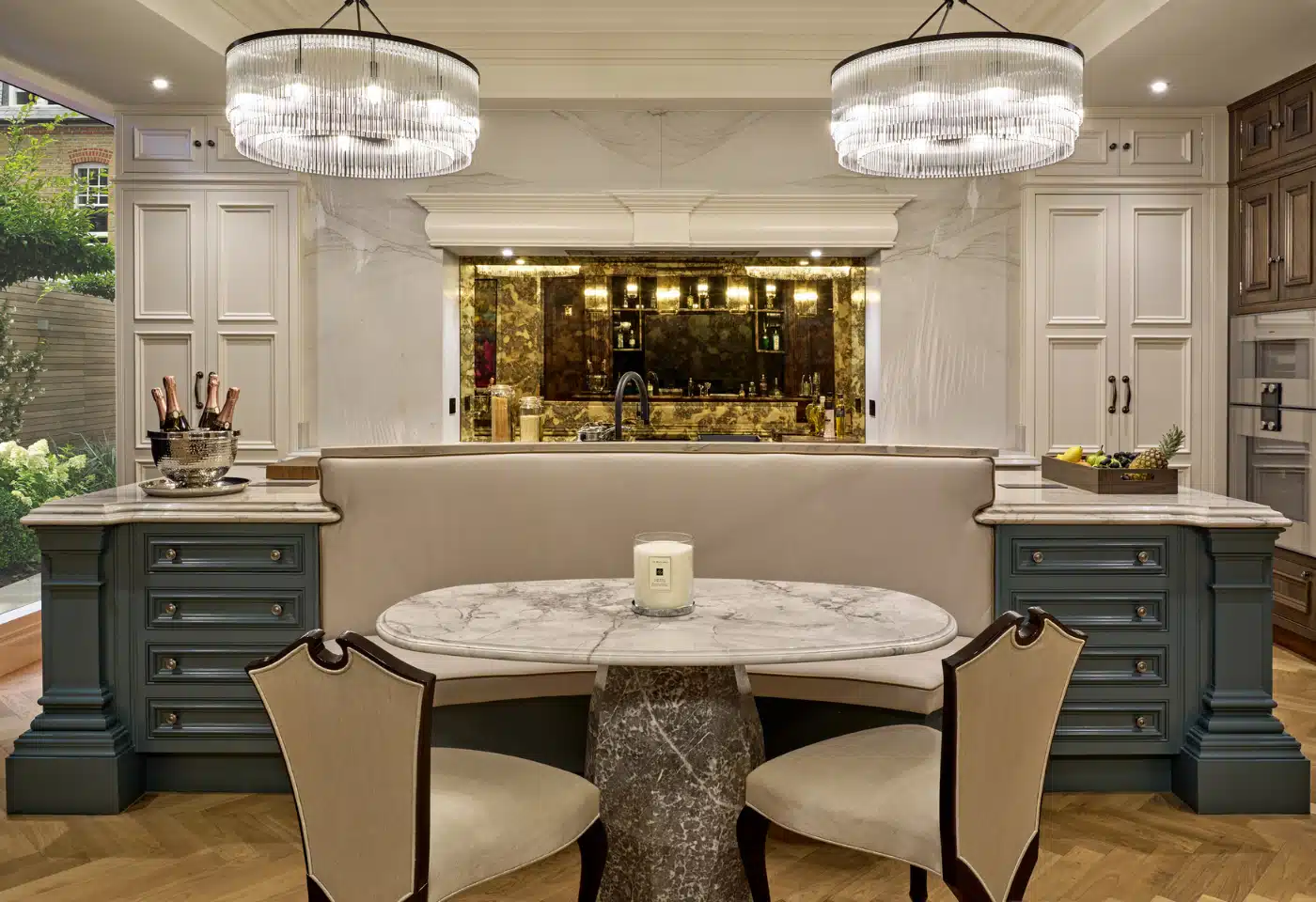
British Interior Design: Traditional Elegance
While every project we undertake is tailored to the unique vision of our client, clear trends emerge in the styles favoured on each side of the Atlantic. In the UK, where homes are often considerably older, there remains a strong preference for timeless, traditional design. Our Architectural Collection, with its intricate bolection mouldings, friezes, pilasters and classical columns, is a natural fit for these heritage properties, lending a sense of refinement and historical continuity that suits Georgian townhouses and Victorian villas alike.
Colour and material choices reinforce this heritage feel. British interior design tends towards muted, earthy palettes, including soft greens, warm stone tones and classic neutrals. These colours are often paired with tactile, natural materials such as timber, stone and richly textured fabrics like velvet and wool. The effect is a room that feels grounded, layered and quietly confident, rather than one that shouts for attention.
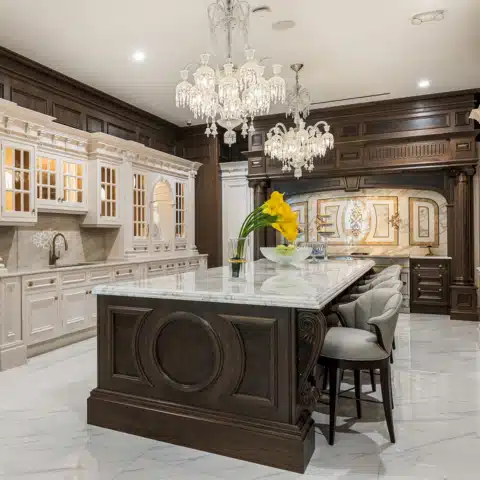

American Interior Design: Contemporary Sophistication
By contrast, clients on the US West Coast often gravitate towards more contemporary aesthetics. Here, our OPUS Collection, our first contemporary range, continues to be particularly popular. Its clean lines and minimalist finishes suit the sleek, new-build homes that dominate this region, striking a balance between functionality and sophistication that aligns with the lifestyle and architecture of these modern residences.
American interiors also tend to embrace bolder, more experimental colour and a wider material palette. Leather, glass and metal sit comfortably alongside one another, often mixed with more confidence than we would typically see in a British scheme. This isn’t a lack of restraint so much as a different starting point: newer homes, larger rooms and a cultural willingness to make a statement all play their part.
Transitional Interior Design: A Style That Unites Both
Our Head of Design, Oliver Deadman, has observed that a single trend has emerged on both sides of the Atlantic in recent years: a shift towards transitional design. A happy medium between traditional and contemporary style, it is characterised by, in his words:
“Strong classical form with keyed back ornamental detailing, enhanced by contemporary facing materials such as stone, glass and metal work, all create a timeless elegance.”
It’s easy to see why this style resonates equally in a Cotswolds farmhouse and a Los Angeles hillside home. Transitional design keeps the proportion, symmetry and craftsmanship of classical cabinetry, while softening or simplifying the ornamental detail and introducing more contemporary materials and finishes. The result reads as neither strictly heritage nor strictly contemporary; it feels current without dating quickly, and formal without feeling stiff.
For clients who are drawn to both British heritage and American ease, transitional design offers a genuine middle ground rather than a compromise. We see this most often in kitchens: a classical cabinetry silhouette, perhaps drawn from our Architectural or Edwardian collections, finished in a quieter palette and paired with honed stone worktops or matt metal ironmongery in place of more ornate detailing. It’s a look that travels well between markets precisely because it borrows the best of each.
Scale and Proportion
One of the most notable differences between British and American interiors lies in the scale of the properties we work with. In the United States, generous room proportions and towering ceilings offer a remarkable canvas for design, allowing for bold cabinetry, grand kitchen islands and larger-than-life statement pieces that command attention.
In the UK, although we work with a great many large new-build homes, many properties, particularly within cities, date back to the Victorian era or earlier, and are characterised by smaller, cosier rooms, terraced layouts and lower ceilings. Designing for these spaces requires ingenuity and precision. Our design teams excel at creating cabinetry that maximises every inch while enhancing the perception of light and space. Within one recent barn conversion project, for example, we used carefully positioned columns to draw the eye upward and chose a bright, airy palette to make the room feel both taller and more expansive.
Curated Perfection vs Lived-In Charm
There’s a subtler distinction, too, in how each culture likes a finished room to feel. American interiors tend to favour a polished, intentionally styled look: every surface considered, every finish immaculate. British interiors, by comparison, are generally more forgiving of imperfection: a well-worn armchair, an inherited side table, or a scattering of books left out are seen as adding warmth and character rather than untidiness. Neither approach is right or wrong; they simply reflect different attitudes to age and patina.
At Clive Christian, we find this plays out in how clients on each side of the Atlantic brief us for bespoke kitchen cabinetry. British clients often ask for new cabinetry to carry a sense of age from the outset, choosing a softened finish, aged brass, and ironmongery with a little weight and history to it. American clients are more likely to prefer every surface and finish to start out looking crisp and newly made, with no hint of wear. Understanding this helps us tailor not just the design, but the finish itself, to each client’s expectations.
The Role of Kitchen Appliances
Kitchen appliances play a pivotal role in defining both the aesthetic and the functionality of a home. In the US, large-scale appliances such as range cookers and double-door refrigerators are not only practical but serve as bold design statements in their own right, a preference that reflects both larger room sizes and a cultural inclination towards showcasing appliances as part of the design.
UK homeowners, conversely, tend to favour a more discreet approach, seamlessly integrating appliances into cabinetry. Hidden fridges, concealed microwaves and built-in warming drawers are among the most sought-after features, allowing for a harmonious, uncluttered appearance that suits both traditional and contemporary spaces alike.
Designs for Tea and Coffee Lovers
Stereotypical it may be, but the British love a cup of tea, and always will. Bespoke tea and coffee cupboards have become a defining feature of many of our UK kitchen designs. These carefully crafted spaces house everything needed for the perfect brew, from neatly organised drawers to dedicated compartments for cups, saucers and accessories.
Coffee culture is, of course, just as deeply ingrained in the United States, though the approach differs. Rather than a coffee cupboard, American clients more frequently opt for an integrated coffee machine, which serves as both a practical addition and a sleek design feature in its own right.
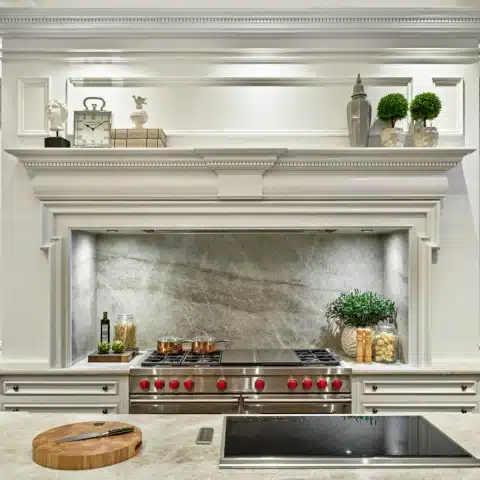
Light, Colour and Palette Choices
Colour rarely behaves the same way twice. The quality and direction of natural light change how any given shade reads in a room, which is part of why a palette that feels perfectly balanced in one home can look quite different in another. This is worth bearing in mind when working across British and American interior design, given how differently the two approach colour. The muted, layered tones common in British interiors and the bolder, higher-contrast choices more typical of American homes are both, in part, a response to the light each is designed to sit within. It’s one more reason we always recommend testing colours and finishes in situ, rather than relying on how they appear elsewhere.
Bring Transitional Interior Design to Your Home
At Clive Christian Interiors, we take pride in creating designs as diverse and individual as our clients. Whether rooted in timeless British tradition, contemporary American sophistication, or the transitional style that increasingly bridges the two, our bespoke interiors reflect not only the architectural character of a home, but the personality and lifestyle of those who live there.
Please do get in touch if you would like to discuss a project with us, we would love to hear from you.
Frequently Asked Questions
What is transitional interior design?
Transitional interior design blends the classical proportion and craftsmanship of traditional style with the simpler lines and contemporary materials associated with modern design. It typically features restrained ornamental detailing alongside finishes such as stone, glass and metal.
What is the main difference between British and American interior design?
British interior design tends towards traditional detailing, muted colour palettes and discreetly integrated appliances, reflecting the UK’s older housing stock. American interior design favours larger, more open spaces, bolder colour and appliances treated as design statements, reflecting newer builds and different cultural preferences.
Why do British and American colour palettes differ?
Taste plays the biggest role, but light matters too. The quality and direction of natural light changes how any colour reads in a room, which is one reason palettes that work well in one setting don’t always translate directly to another.
How do British and American kitchens differ?
British kitchen design tends to favour discreetly integrated appliances and muted colours. American kitchens more often showcase large-scale appliances such as range cookers and double-door refrigerators as design statements.
What materials define British vs American interior design?
British interiors tend to favour natural, tactile materials such as timber, stone, velvet and wool, reinforcing a sense of heritage. American interior design draws on a broader material palette, including leather, glass and metal, often mixed together with more confidence to create a bolder, more contemporary feel.
Is transitional interior design suitable for period or historic homes?
Yes. Transitional design retains the proportion and craftsmanship associated with classical cabinetry, making it well suited to period properties, while introducing simpler detailing and contemporary materials. This makes it a natural choice for clients who want a historic home to feel current without losing its architectural character.