
INTERIOR DESIGN TRENDS FOR 2026
As 2026 gets well under way, we’re excited for another year of interior design within the world’s finest homes. We’re looking ahead with thoughts on the design trends we might expect to see from clients, partners and brands.
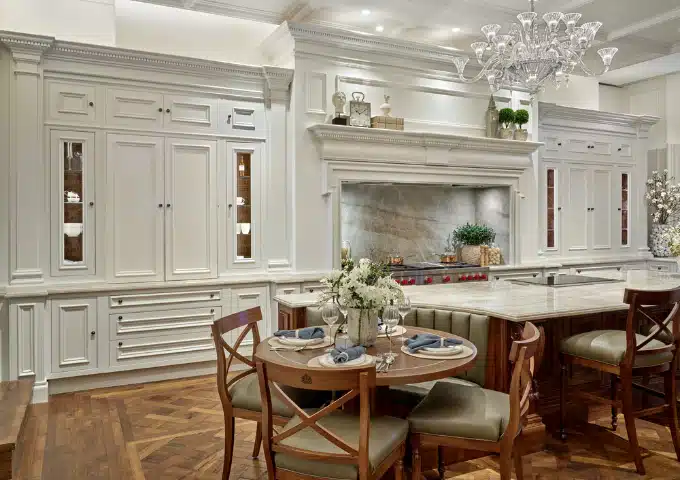
As 2026 takes shape, the clearest shift among this year’s interior design trends is away from anything that feels prescribed. Anyone researching trends for interior design this year will notice a familiar thread: our clients are asking for richer, more textural materials, deeper and more considered colour palettes, and a renewed appreciation for handcrafted detail that no template can replicate. Beneath all of it runs a quieter thread: a move away from whatever feels mass-produced, fleeting, or borrowed from somebody else’s home. Below, we explore the trends shaping how we are designing for our clients this year, and the collections and materials bringing each one to life.
Deeper Colours and Earth Tones
Warm, grounded colour has continued its steady rise, and current home decor trends show those tones deepening further still as we continue throughout 2026 and beyond. Where recent years favoured softer neutrals and gentle mocha browns, this year’s palettes lean into richer, more saturated earth tones, including chocolate, walnut, and umber, chosen as foundation colours rather than accents.
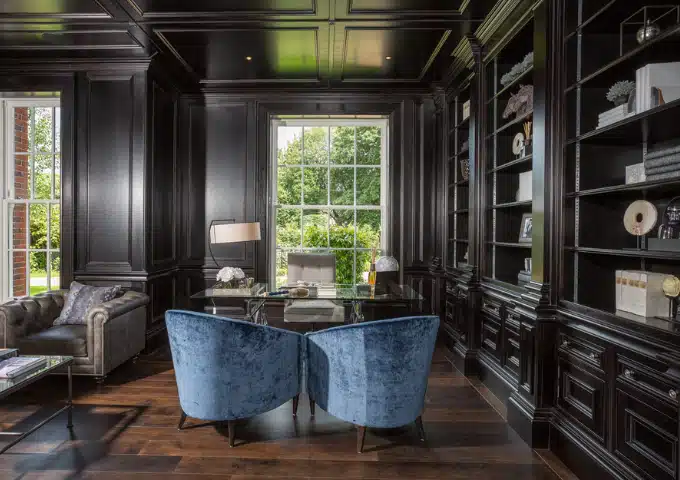
Clive Christian cabinetry can be finished in a considerable range of timbers, stains and painted colours, and we are finding darker, richer tones increasingly popular as a foundation for the rest of a room’s design, a base from which lighting, metalwork and textiles can be layered. It is a palette that reflects the wider interior colour trends of the moment, suiting both traditional and contemporary schemes equally well, from a Senate library to an OPUS kitchen.
Art Deco, Still Setting the Tone
The Art Deco movement, made famous in the early twentieth century, remains as influential as ever in 2026. This decorative style is characterised by simple, clean lines and shapes, geometric patterns and luxury materials.
Over a century on, these design principles sit at the heart of our Metro Deco collection. The style nods to the Art Deco era with clean lines, flat panelled doors, hand-pressed metallic inlays and fluted glass panels, all adding to its geometric appeal. The choice of inlays also harks back to the glamour of the era’s luxurious materials; alongside their cabinetry, our clients can choose from metals such as brass and steel, or luxury materials such as mother of pearl. Every Clive Christian project is completely bespoke, allowing our clients to create home designs truly unique to them, whether through materials, timbers or colours.
Wood, Reimagined: Mixed Tones & Natural Grain
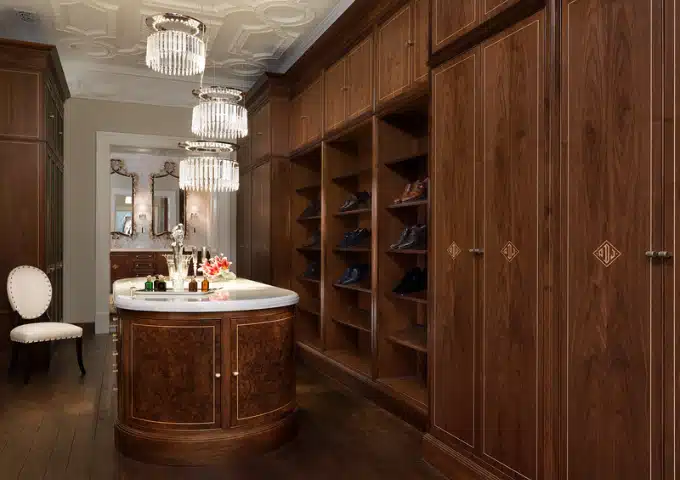
For years, a considered scheme meant a single timber, consistently stained, run through every room. That rule is softening, and it’s one of the clearest home design trends we’re seeing this year. In 2026, we are seeing clients embrace multiple wood tones within the same space, for example a mahogany writing desk set within a paler ash-panelled study, or painted cabinetry set against the warmth of an exposed timber beam, layered deliberately rather than left to chance.
It is an approach that rewards bespoke work particularly well, because it depends on getting the balance of tone, grain and finish exactly right. Across our Architectural and Artisan collections, we work in a wide range of timbers and stains, and increasingly we are guiding clients towards combinations rather than a single, matched palette. Pairing a darker painted finish with natural oak or walnut detailing can give a room depth without losing its cohesion. The result feels collected rather than uniform, and distinctly more personal.
Detail in Design
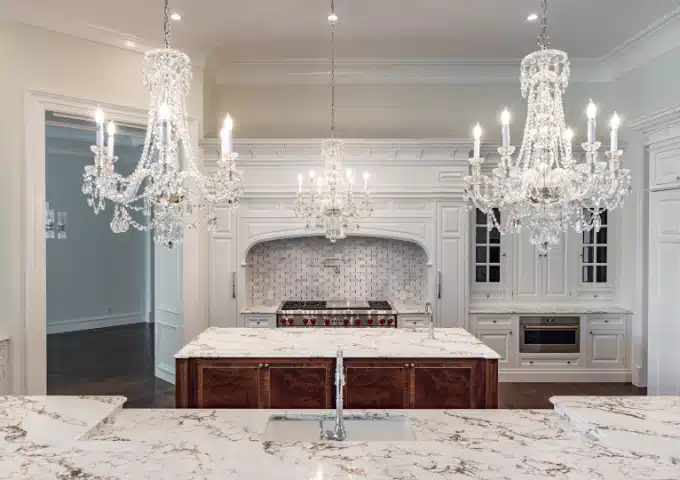
Detailing is doing more work in a scheme than it has in some time, not as an accent, but as the focal point of a room’s design in its own right.
Across collections such as Architectural, Edwardian and Senate, this attention to detail has always been central to how we work, from hand-carved cornicing to bespoke ironmongery, finished to match a room’s palette exactly. In 2026, we are seeing clients lean further into this level of craft, treating hardware, traditional joinery flourishes, mouldings and finishes as part of a room’s character rather than an afterthought.
Beyond the Trend Cycle: Designing for You
Perhaps the most significant shift among current interior design trends is not a material or a colour at all, but an attitude. After years of homes designed to photograph well, more of our clients are asking for the opposite: rooms that feel entirely their own, drawn from how they actually live.
It is a principle that sits at the heart of how we have always worked. Every Clive Christian interior is designed around a single client’s brief, not a mood board borrowed from elsewhere, which is, in its own way, ahead of where the wider industry is only now arriving.
“The best interiors we design are never a reaction to what’s trending, they are a response to how a family actually wants to live in their home. That has always been true, and it is why our clients keep coming back to bespoke.” — Oliver Deadman
Statement & Sculptural Lighting
While perhaps not a new trend, we expect interest in showstopping statement lighting to keep growing in 2026. In fact, statement lighting has been at the core of Clive Christian Interiors since its inception. Clive Christian himself decided to create the ultimate statement kitchen by placing a chandelier above his kitchen island in the 1970s, and more than fifty years later, it remains a staple of Clive Christian Interiors’ iconic style.
We are proud to be a brand partner of Baccarat, supplier of the finest crystal lighting and chandeliers, and it is always an honour to work with them to light up our home designs.
We are also pleased to be an authorised retailer for Baccarat in London. Please do get in touch if you are interested in purchasing any of their products, our team will be delighted to help you.
Tile as a Feature
Tile is increasingly being treated as a material worth designing around, rather than a practical necessity chosen last. Textured, hand-finished and small-format tiles are appearing as deliberate features, whether for a splashback that anchors a kitchen, or flooring that sets the tone for an entire bathroom.
Within our kitchen and bathroom projects, we increasingly treat tile as part of the material palette from the very start of a design, chosen alongside cabinetry finishes and metalwork rather than fitted in afterwards..
Rooms Designed with Intention
Among this year’s home interior design trends, one of the clearest is a growing preference for interiors that feel considered rather than crowded. This is not minimalism for its own sake, but a more deliberate approach to what a room actually needs. At the same time, clients are increasingly precise about how each room in their home will be used, rather than designing generically and hoping a space finds its purpose later.
These two ideas sit naturally together, and both are second nature to bespoke design. A study built for genuine work, rather than a spare room with a desk in it. A dressing room planned around a specific wardrobe, not a generic run of rails. A bar designed for how a client actually entertains. Because every Clive Christian project begins with a conversation about how our clients live, not a fixed catalogue of finishes, restraint and purpose tend to arrive together, room by room, rather than as an afterthought applied at the end.
Texture, Textiles & Wall Treatments
Flat, uniform surfaces are giving way to rooms with genuine tactility, one of this year’s clearest interior decorating trends. Textured plasterwork, richly woven fabrics, and delicate, small-format patterns are being used instead of the maximalist patterns of recent years. It is a trend about depth and materiality rather than pattern for its own sake.
Within a bespoke scheme, this often plays out through the fabrics and finishes chosen to sit alongside cabinetry; an upholstered window seat, a panelled wall, or the textiles chosen for a dressing room or bedroom. Layering these textures thoughtfully is where a well-designed room moves from handsome to genuinely inviting.
What We’re Leaving Behind
As much as any single trend, 2026 is defined by what our clients are moving away from: anything that feels mass-produced, disposable, or copied wholesale from somewhere else. Perfectly matched, uniform schemes with no variation in tone or texture are giving way to something more layered. Off-the-shelf finishes chosen for speed rather than fit are giving way to materials selected specifically for a room and the people who will live in it.
It is, in many ways, simply a renewed appreciation for what bespoke design has always offered, which is precisely why so many of this year’s trends already feel at home within a Clive Christian interior.
Looking Beyond 2026
Trends in interior design will keep shifting, as they always do, but the underlying appetite for craftsmanship, personal design and genuine material quality shows no sign of fading. If you have a project you would like to discuss, our teams would be delighted to help you bring it to life.
If you have a project you would like to discuss, please do get in touch, our teams will be delighted to assist you. Make an enquiry or call +44 (0)203 959 1060 to discuss your home design vision with our team.
Frequently Asked Questions
What are the interior design trends for 2026?
Interior design trends in 2026 favour richer, mixed wood tones, deepening earthy colour palettes, tactile detailing such as fluted panelling and inlaid metalwork, and a broader move towards personal, bespoke design over anything trend-led or mass-produced.
What’s trending in home decor right now?
Alongside warmer, deeper colour palettes, today’s home decor trends favour textured materials, from tactile wall treatments to feature tiling, and a more considered, purpose-led approach to how each room is designed and used.
What decorating trends should I avoid in 2026?
Perfectly uniform, single-tone schemes and off-the-shelf finishes chosen for convenience rather than fit are among the decorating trends to avoid this year, if you want a home that feels considered rather than mass-produced. In their place, we’re seeing a growing appetite for characterful antique or inherited pieces within an otherwise bespoke scheme.
Do interior design trends apply to bespoke, made-to-order furniture?
Yes, though bespoke design allows a trend to be interpreted rather than followed exactly. A Clive Christian scheme is always built around a client’s own brief first, with current trends informing material and colour choices rather than dictating the design.