
CABINET DESIGN IN THE LUXURY HOME: KITCHENS & DRESSING ROOMS
Clive Christian has long been known for its exceptional craftsmanship and bespoke service, and this care and attention to detail applies just as much to the interiors of our cabinets as it does to the exteriors.
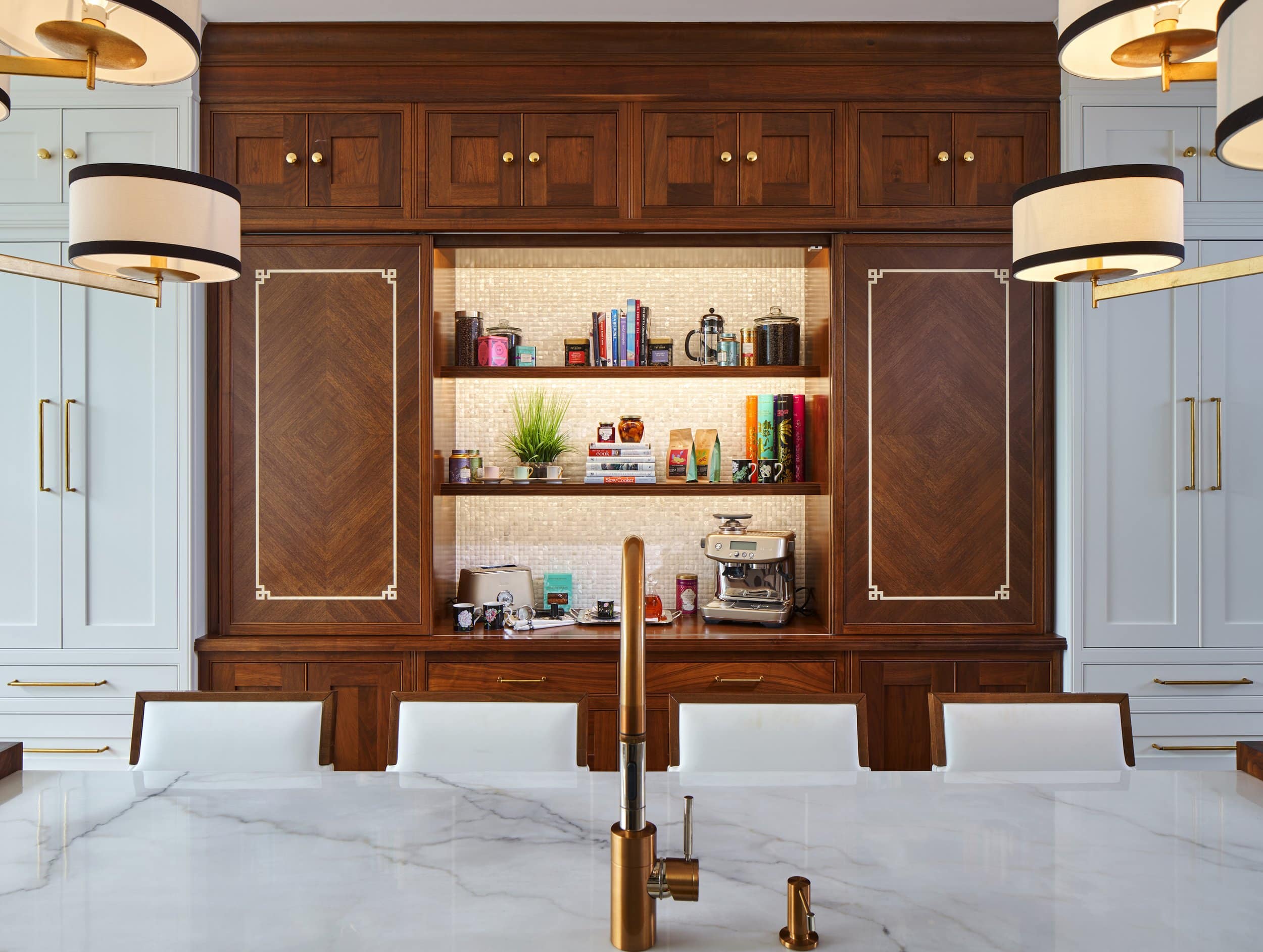
Clive Christian has long been known for its exceptional craftsmanship and bespoke service, and nowhere is this more apparent than in the design of our cabinetry. In a luxury home, cabinet design is far more than a practical consideration, it defines the architectural character of a room, establishes its visual rhythm, and sets the tone for everything within it.
Our Head of Design, Oliver Deadman, takes us through what distinguishes truly exceptional cabinet design, and how that philosophy shapes our approach to kitchens and dressing rooms alike.

From pull-out pilasters to shoe racks and sock divides, our Head of Design, Oliver Deadman, talks us through the evolution of internal cabinetry.
THE PRINCIPLES OF LUXURY CABINET DESIGN
Exceptional cabinet design begins long before a single door is crafted. It starts with the architecture of the room itself; the ceiling heights, the natural light, the flooring transitions, the mouldings and cornicing that give a home its character.
In a luxury setting, bespoke cabinets must respond to all of these elements. Proportions are tailored precisely, so that tall units balance harmoniously with lower runs, and every detail feels intrinsic to the space rather than placed within it. Standard, off-the-shelf solutions are produced to fixed dimensions that may require filler panels or visible adjustments – interruptions that a considered interior should never need.
Material selection is equally defining. At Clive Christian, we work with premium timbers, fine lacquers and carefully chosen hardware to ensure that the exterior of every cabinet reflects the quality of the home it inhabits. Whether the design is traditional or contemporary in character, the craftsmanship remains constant. Cabinet design at this level is not simply about appearance, it is about creating spaces that feel completely resolved.
Bespoke Kitchen Cabinet Design
The kitchen has changed considerably over recent decades, and with it, the demands placed on kitchen cabinet design. As Oliver explains, the rise of the celebrity chef and the arrival of restaurant-quality appliances from brands like Miele and Sub-Zero Wolf has transformed the kitchen from a purely decorative space into one where serious cooking takes place. “Kitchens that were previously ‘look but don’t touch’ are now fitted with professional equipment like vacuum drawers and steam ovens.”
This evolution has placed new demands on designer kitchen cabinets. Cabinetry must now accommodate professional-grade appliances while maintaining the elegance expected of a luxury interior. Door styles, finishes and architectural detailing must work harder, and withstand the demands of serious cooking without sacrificing an ounce of refinement.
At Clive Christian, our approach to bespoke kitchen cabinets considers the full picture. Thoughtful storage solutions are crafted from considered and sustainable materials, with internal features that reflect the client’s taste and lifestyle. We integrate products such as Kaelo, which uses military-grade cooling hardware to rapid-chill bottles of wine, a seamless addition that disappears entirely within the cabinetry.
Technology is increasingly central to kitchen cabinet design. Home integration systems such as Lutron allow clients to control lighting and music throughout the house, and our cabinetry is designed to work in harmony with these systems. Discreet charging stations are also popular, allowing devices to be stored out of sight while remaining fully charged.
Security is another consideration that clients increasingly value in kitchen cabinet design. We work with Chubb on a fingerprint recognition system that opens a cabinet door at a touch, revealing a safe drawer for keys, a wallet and a phone.


Bespoke dressing room cabinet design
The bespoke dressing room has undergone a similarly significant transformation. What was once a purely functional space for storing and organising clothing has evolved into one of the most personal and considered rooms in the luxury home.
Cabinet design in the dressing room must balance the practical demands of storage with the aesthetic expectations of a fully designed interior. Proportions, door styles and material finishes are chosen to create a space that feels cohesive and calm, a setting in which the experience of getting dressed becomes genuinely pleasurable.
Oliver describes the approach: “Our goal is to make the dressing room experience feel fully designed throughout. Storage features include presentation racks for shoes: angular shelves lined with leather with a glass upstand that the shoe collection can hook over. We’re increasingly using LED lighting for display purposes too.”
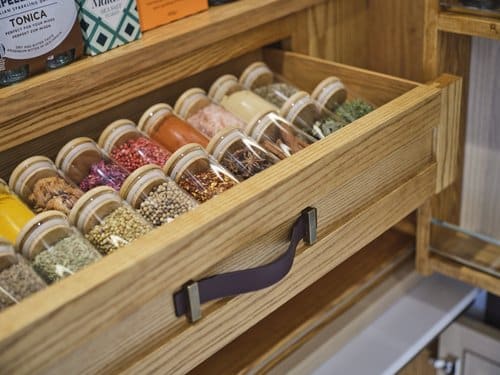
The interior design of dressing room cabinetry reflects this same level of care. “For internal drawer setups, we’re seeing lots of glass and leather, as well as partition divides for jewellery, tie inserts and sock divides made with beautiful fabrics and designs. We’re also using timber cabinetry elements to house these in a decorative manner that elevates the experience of getting dressed in the morning.”
The luxury dressing room is also evolving into an entertaining and lifestyle space in its own right. “We’re integrating inset coffee machines and discreet cooling areas for drinks,” Oliver notes. “We’re also fitting audio systems so you can enjoy a drink and listen to music while you get ready to go out. The dressing room is no longer purely functional, it’s somewhere you can have a bit of fun.”
personalisation and the art of the interior
Perhaps the most distinctive aspect of Clive Christian cabinet design is the depth of personalisation available, particularly within the interior of the cabinetry itself, where the design can become an expression of the client’s personality as much as their practical needs.
Oliver offers a characteristically elegant analogy: “We often use the comparison of the Paul Smith business suit – you’ve got the elegant, professional exterior, and then inside there’s a fantastic, vibrant lining, which reflects the wearer’s personality. The same is true of our cabinets: the exterior grandeur opens up to reveal a beautiful inner space, appointed to the level you’d expect from Clive Christian.”
The range of materials available for interior personalisation is broad and continually evolving. “We might introduce a pop of colour from a fabric lining, or we might use vegan alternatives to leather, like jute. One client asked us to work with coconut husk, which is similar to felt. We have a lot of fun thinking about what materials to use and how we can cater for the client and make them feel special.”
Every room we design is tailored to the client’s specific requirements, and the scale and proportion of the fittings and appliances within it.


explore cabinet design with our team
If you would like to explore how bespoke cabinet design could transform your kitchen, dressing room or wider home, we would be delighted to guide you through the possibilities. Please get in touch with our team or visit one of our showrooms to begin the conversation.
frequently asked questions about custom cabinet design
What is luxury cabinet design?
Luxury cabinet design refers to the creation of bespoke cabinetry that is tailored precisely to the architecture of a home and the lifestyle of the client. It encompasses the exterior design (proportion, door style, materials and finish) as well as the interior, where storage features, linings and fittings are crafted with the same level of care and craftsmanship. In a luxury setting, cabinet design defines the character of a room and is considered an integral part of the wider interior scheme.
What makes bespoke kitchen cabinets different from standard alternatives?
Bespoke kitchen cabinets are designed and crafted specifically for an individual space, allowing every dimension, material and detail to be tailored precisely. Unlike standard alternatives, which are produced in fixed sizes and finishes, bespoke kitchen cabinets are made to respond to the architecture of the home, its ceiling heights, proportions and existing detailing. The result is cabinetry that feels completely integrated rather than simply installed, with a level of material quality and joinery craftsmanship that endures for decades.
What should I consider when designing kitchen cabinets?
When approaching kitchen cabinet design, it is worth considering the architectural character of the room first, including the proportions, the natural light, and the relationship between the kitchen and adjacent spaces. From there, the choice of style, finish and hardware should reflect both the wider interior scheme and the practical demands of the kitchen. Interior storage, appliance integration and technology are equally important considerations, ensuring that the finished design is as functional as it is beautiful.
How are luxury dressing room cabinets designed?
A luxury dressing room is designed as a complete interior, with cabinetry that responds to the proportions of the space and the wardrobe requirements of the client. Exterior design, including door style, finish and hardware, establishes the room’s aesthetic, while the interior is appointed with bespoke storage features tailored to the client’s collection. Shoe racks, jewellery partitions, fabric-lined drawers and integrated lighting are among the details that distinguish a truly bespoke dressing room.
Can cabinet interiors be personalised?
Entirely. The interior of a Clive Christian cabinet is designed with the same attention to detail as the exterior. Clients can choose from a wide range of materials, from leather and glass to fabric linings, jute and timber elements, as well as colours, patterns and organisational features that reflect their individual tastes and daily routines. Integrated technology, including audio systems, charging stations and security features, can also be incorporated seamlessly within the cabinetry.